This note is general education from the Neocpm journal. It does not diagnose you or replace a visit. Sudden chest pain, fainting, or severe breathlessness needs emergency care, not a clinic form.
A heart review is only as good as the picture you bring into the room. Many people arrive with one blood-pressure number taken in a noisy pharmacy, a cholesterol printout they have not read, and a worry they have been carrying since a relative became ill. Dr. Lena Okoye’s clinics are built to turn that bundle into a plan. The habits below are the ones she asks people to practice before they sit down.
Measure a pattern, not a trophy
Blood pressure moves. It rises with pain, coffee, a full bladder, and the simple fact of a cuff in a clinic. A single perfect reading can hide a week of high mornings. A single frightening reading can be a bad minute. What helps is a small series: two readings, one minute apart, morning and evening, for four or five ordinary days. Sit with your back supported, feet on the floor, and the cuff on bare skin. Write the numbers down. Do not discard the high ones. They are part of the pattern.
If you already take pressure medicine, note the time you take it next to the readings. A clinician can then see whether the dose is covering the hours you are actually awake, or only looking tidy at the moment you remembered the tablet.
Bring the whole medicine shelf
Heart risk is rarely managed by one capsule. People often take a pressure tablet, a statin, a painkiller that raises pressure, an over-the-counter decongestant, and three supplements they never mention because they do not feel like “real medicine.” Bring the boxes, or a photo of every label. Include eye drops and anti-inflammatory tablets. Interactions and double-ups are easier to see when the list is complete.
Also note what you stopped. A medicine abandoned because of an ache, a cough, or a rumour is useful information. The next plan should not repeat a choice you already could not live with.
Describe effort in real life
“I get tired” is true and too vague to treat. Better: “I used to walk to the market without stopping. Now I pause on the second flight of stairs.” Or: “The tightness starts when I carry the child, fades when I sit, and has never woken me from sleep.” Those details separate deconditioning, lung problems, rhythm trouble, and angina-like patterns. Mention ankle swelling, a pillow added at night, or a flutter that ends with a thump.
If you can, recall the first week the change appeared. A slow drift over a year is a different conversation from a change that arrived this month.
Read cholesterol as a story about the next decade
A laboratory flag is not a personality. Age, blood pressure, smoking history, diabetes, kidney function, and family events change what a cholesterol number means. Ask what the result changes in your plan. Sometimes the answer is a medicine. Sometimes it is a repeat in a few months after a change in food and walking. Sometimes an already-planned tablet simply stays. The useful visit ends with one sentence you can repeat: why this number matters for you.
Know the red lines
Clinic education has edges. Pressure in the chest that is crushing, new, or paired with sweating, nausea, or pain into the arm or jaw is not a journaling exercise. A faint, a sudden severe breathlessness, or a heart rate that will not settle and makes you feel faint needs emergency care. Use the Neocpm appointment form for planned reviews, new but stable worries, and follow-up. Do not use it to wait out an emergency.
Leave with a date
A good heart conversation names the next check. That might be a repeat pressure log, a blood test, a tracing, or a simple message if a named side effect appears. If you leave with only “we will see,” ask when. Neocpm coordinators confirm visit plans by email so the decision is not left in a hallway.
Leave the visit able to repeat the plan in one or two sentences. If you cannot, the conversation is not finished.
Questions about your own symptoms belong in an appointment, not in the comment box. Coordinators read appointment requests and reply by email.
Leave a note
Bones and joints · Neocpm journal
When joint stiffness deserves a closer look
This note is general education. It cannot tell you whether your joint needs a scan or an operation. A joint that is hot, suddenly unable to bear weight, or follows a significant injury should be assessed promptly.
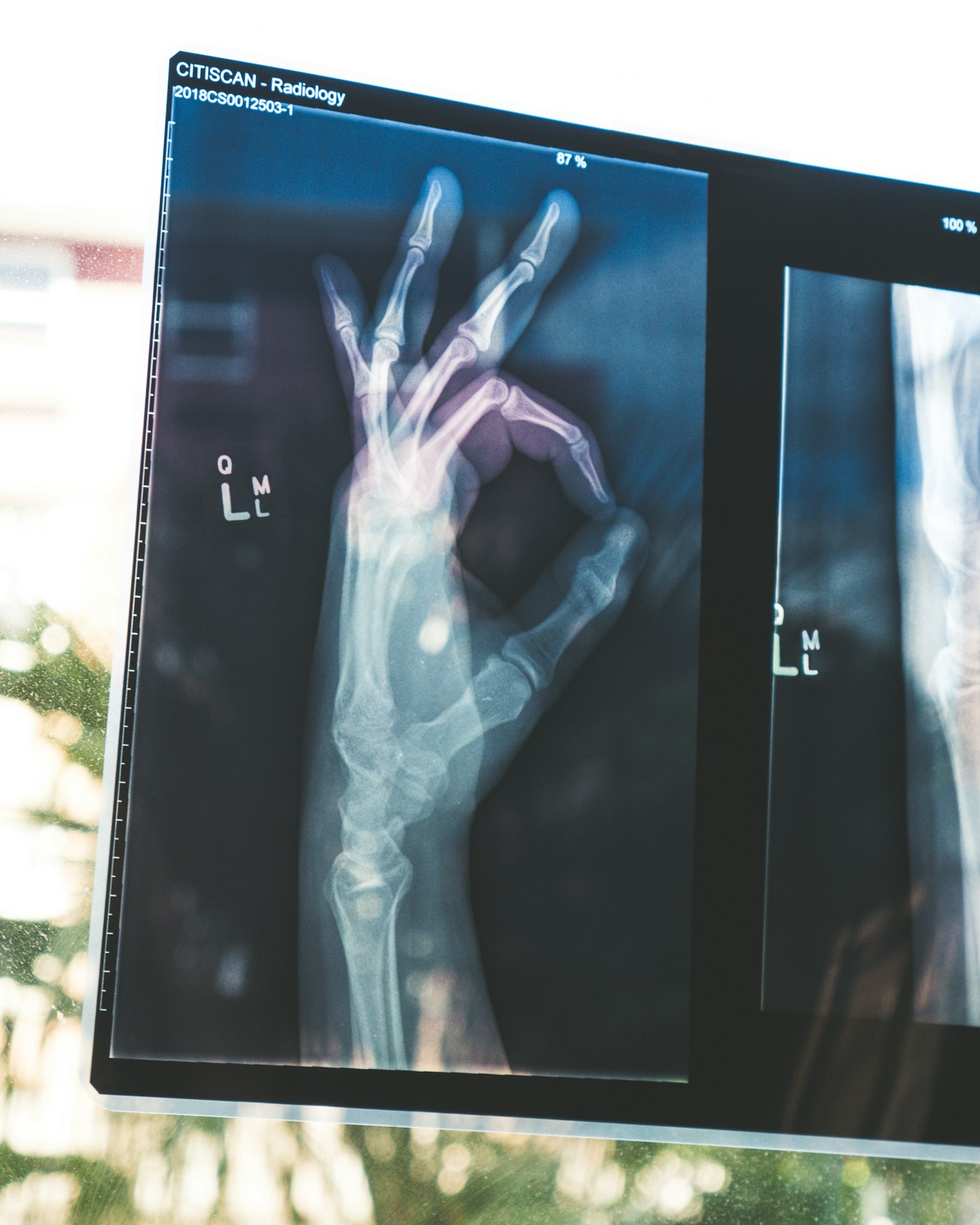
Stiffness is ordinary and also, sometimes, a signal. The orthopaedic and family physicians at Neocpm separate those two stories by asking for a precise account of movement. Imaging, including radiographs like the hand study shown with this note, is a tool for a question — not a ritual at the start of every ache.
Start with the job the joint has stopped doing
“My knee hurts” can mean a sharp catch on stairs, a dull ache after sitting at a desk, night pain that forces you out of bed, or a swell that appears the evening after a long walk. Each pattern points somewhere different. Before a visit, write the movement you miss most. Clinicians plan around function: kneeling, lifting a pan, sleeping, or getting out of a car. Pain scores without a function are hard to treat.
Note swelling, giving way, locking, and whether the joint is stiff for minutes or for half the morning. Morning stiffness that lingers can suggest inflammation. Stiffness that eases after a few steps often sits with wear and muscle guarding.
What a careful examination is looking for
In the room, the clinician watches you walk, then moves the joint, then asks you to move it yourself. They compare sides. They look for heat, effusion, and tenderness in a specific spot rather than “somewhere in the knee.” Strength and the joints above and below are part of the same exam, because a limp from the hip can announce itself as knee pain.
Old injuries matter. So do sports, work that involves kneeling, and a recent change in training. Bring prior reports if you have them. You do not need to arrive with a new scan already arranged.
When pictures help
A radiograph is useful when the question is alignment, joint space, a suspected fracture, or a baseline before a bigger decision. It is less useful as a way to soothe anxiety on day three of a muscle strain. Ultrasound or other imaging is chosen when the examination suggests a tendon, a collection of fluid, or a problem the plain film will not show. Dr. Erik Holm and the orthopaedic conversations at Neocpm start from the exam and add pictures when the picture would change the advice.
If you already have images, the most helpful thing you can bring is the report and the date. A picture without a question tends to create a new worry rather than a plan.
Movement plans come before slogans about surgery
Many stiff joints improve with a specific loading plan: stronger muscles around the joint, less of the one activity that flares it, and a pain strategy that lets you keep moving. Rest alone often makes the next month worse. An operation is a tool for structural problems that match the symptoms and have not yielded to a fair trial of conservative care, or for injuries where waiting is the riskier choice.
If surgery is mentioned, ask three things: what it is intended to restore, what recovery restricts, and what happens if you wait three months. A good surgical counselling visit, the kind Dr. Holm runs, can end with “not yet” and still be a success.
How to prepare the visit
Wear clothing that allows the joint to be seen. List pain medicines and how much they actually help. Mention fever, redness, or a joint that has become dramatically worse over a day — those are not “wait and stretch” problems. For everything else, a clear diary and an honest account of what you need the joint to do will make the appointment feel shorter and wiser.
Leave the visit able to repeat the plan in one or two sentences. If you cannot, the conversation is not finished.
Questions about your own symptoms belong in an appointment, not in the comment box. Coordinators read appointment requests and reply by email.
Leave a note
Skin · Neocpm journal
A calmer way to watch a changing mole
This note is general education from dermatology teaching at Neocpm. It is not a skin diagnosis. A spot that is bleeding, growing quickly, or worrying you should be seen. Do not scrape or burn a lesion at home.
Most moles are quiet neighbours. A few change in a way that deserves a trained eye. The anxiety in between is common: people either stare at a spot every hour or avoid looking at all. Dr. Amara Bennett’s clinics are designed for a middle path — a structured look, a photograph when comparison will help, and a straight answer about whether a biopsy is useful.
What “changing” actually means
Colour, border, and size are the classic trio, but sensation matters too. A mole that newly itches, bleeds without being scratched, or looks different from the others on your skin — the so-called ugly duckling — is worth a visit even if it is still small. A spot that has looked the same for years, matches its neighbours, and has a smooth edge is often simply a mole.
New spots in adulthood are not automatically dangerous, and old spots are not automatically safe. The history you can give is the difference. “This appeared in the last two months and the edge is now notched” is a better opening than “I read a list and I am frightened.”
Take a photograph that a clinician can use
Use daylight, not a yellow bathroom bulb. Fill one frame with the spot and take a second, wider photo so the location is obvious. Include a ruler or a familiar object only if it does not cover the border. Do not apply makeup, concealer, or a thick cream before the visit. If the lesion is on the back, ask someone else to take the photo rather than guessing with a mirror.
Date the pictures. A pair taken six weeks apart is often more informative than a single dramatic close-up. Do not use filters.
What happens in the room
A full skin check means more than the one spot you circled. Clinicians look at the scalp, the back, and the feet because people rarely inspect those places well. Dermoscopy — a lit, magnified look — helps separate patterns that are reassuring from patterns that should be sampled. If a sample is advised, you should hear why, how the skin will be closed or dressed, and when the result will be explained.
If the answer is “this can be watched,” ask what change should bring you back sooner than the planned review. Watching is an active plan, not a dismissal.
Rashes are a different conversation
Not every skin visit is about moles. Eczema, acne that is scarring, and rashes that followed a new medicine need their own history: where it started, what it feels like, what you have already applied, and whether anyone close to you has the same pattern. Bring the tubes you have used. Stopping and starting creams the week before a visit can hide the very clues the clinician needs.
Sun, family, and the long habit
A family history of melanoma, a large number of moles, and a past of significant sunburn change how often a check is sensible. Daily protection is unglamorous and effective: shade at the hottest hours, clothing on the shoulders, and a sunscreen you will actually wear on the face, ears, and hands. Dermatology at Neocpm would rather help you build a habit you keep than hand you a routine you abandon.
When you are ready, request a skin visit through the appointments page and say whether you are coming for one lesion or a full check. That single sentence helps the coordinator give the visit the right length.
Leave the visit able to repeat the plan in one or two sentences. If you cannot, the conversation is not finished.
Questions about your own symptoms belong in an appointment, not in the comment box. Coordinators read appointment requests and reply by email.